Every confidential executive search offers a window into how CEOs think about leadership. Some decisions become public months later. Others never do. From the Search Desk is our weekly look inside the conversations shaping HR leadership, executive hiring, and the future of the profession.
It’s Rarely About a Vacancy
Scroll through LinkedIn long enough and you’ll start to believe every CHRO transition follows the same script: a happy “excited to announce” post, a flood of congratulatory comments, and a clean, public handoff.
That’s rarely the real story.
Most CHRO transitions are set in motion long before anyone outside the boardroom knows about them – and understanding why CEOs make these decisions says a great deal about where HR leadership is headed.
The common assumption is that a search only begins once a CHRO leaves.
In practice, many searches begin while the current leader is still fully in the seat.
The CEO isn’t trying to force anyone out. The board isn’t looking to create drama. They’re asking a harder, more strategic question:
Do we have the HR leader we need for what’s next, not just for what got us here?
By the time that question reaches an executive search firm, it’s often been discussed internally for months.
The Business Evolves -and the Role Evolves With It
Here’s the part that surprises people:
Most CHRO transitions aren’t performance stories.
They’re growth stories.
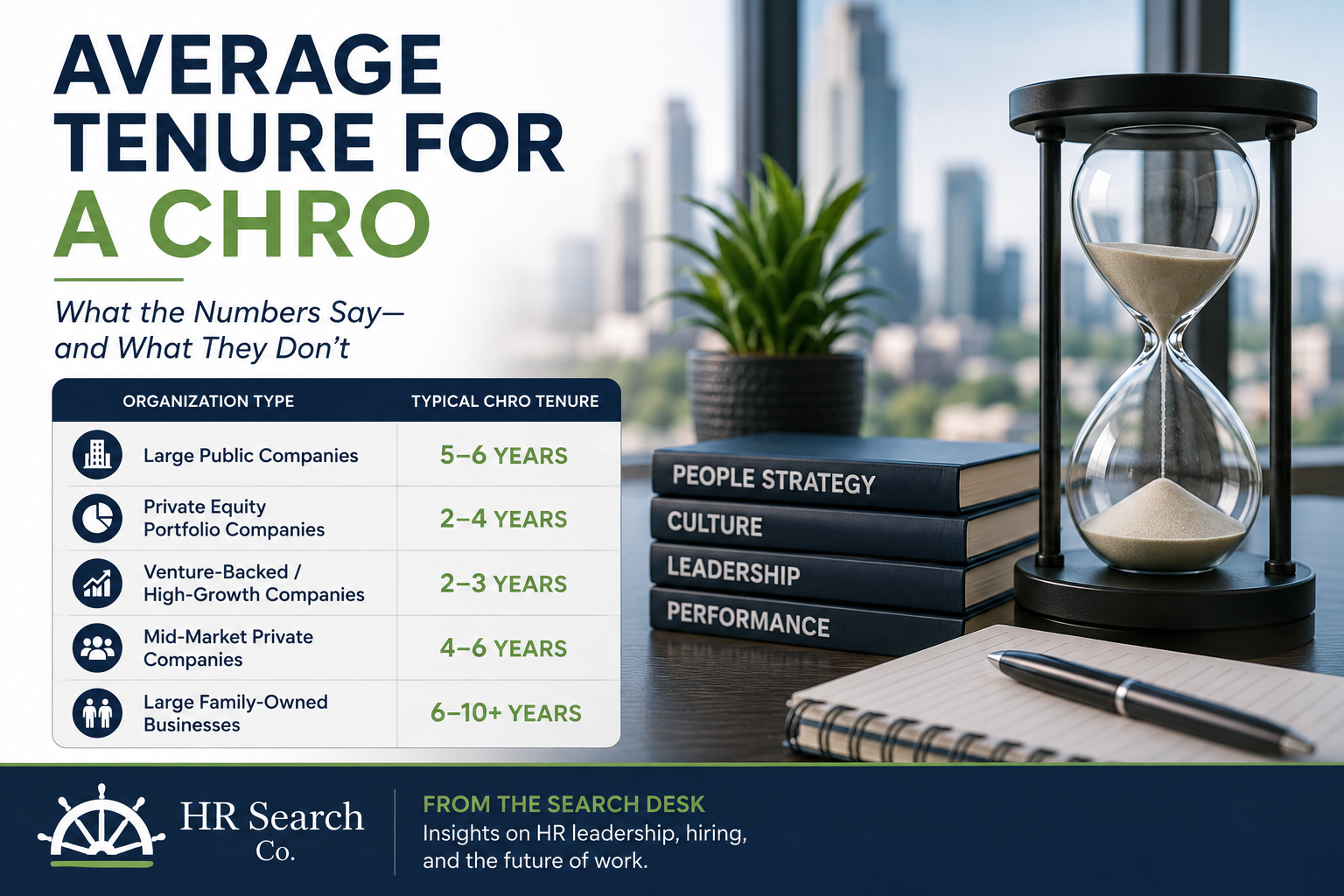
Private equity investment, rapid expansion, increased operational complexity, global growth, acquisitions, or preparing for a future sale all change what the organization needs from its HR leader.
The capabilities that made someone successful five years ago aren’t always the capabilities the business needs today.
That isn’t failure, it’s evolution. As companies evolve, leadership requirements evolve with them.
Why the Decision Stays Quiet
Leadership transitions ripple outward quickly.
Employees notice. Customers notice. Investors notice. Competitors notice.
Handled poorly, even speculation can create unnecessary uncertainty throughout an organization.
That’s why these searches remain confidential.
Running the process quietly allows the CEO and board to evaluate the market, compare talent, and make thoughtful decisions without disrupting the business.
Done well, the transition feels seamless. Done poorly, it becomes the story instead of the business.
What CEOs Are Actually Looking For
When a CEO decides it’s time for a different CHRO, they’re rarely just filling a functional role.
They’re looking for a business leader whose experience aligns with the company’s next stage of growth.
Someone who can:
- Advise the CEO directly
- Influence and engage the board
- Navigate mergers and acquisitions
- Build leadership teams
- Drive succession planning
- Align compensation strategy with business objectives
- Challenge senior leaders when necessary
Today’s CHRO isn’t simply leading Human Resources.
They’re expected to be one of the organization’s most trusted business advisors.
And that expectation continues to rise.
The Searches You’ll Never See
Some of the most consequential CHRO searches never become public.
There’s no job posting.
No announcement.
No visible recruiting process.
Instead, CEOs work through a small circle of trusted executive search firms that quietly approach proven HR leaders—many of whom weren’t looking to make a move.
That’s one reason the hidden HR job market is very real.
From the outside, these transitions can appear sudden.
Inside the boardroom, they’ve often been carefully considered for months.
What This Means for HR Leaders
The clearest lesson from watching CEOs make these decisions time and again is this:
No track record, however strong, guarantees the next chapter.
The HR leaders who stay ahead of the market continue investing in themselves.
They deepen their business acumen—not just their HR expertise.
They stay close to operations.
They understand financial drivers.
They strengthen their executive presence.
And they prepare for the next stage of leadership long before anyone asks the question.
The Bigger Trend
Across executive search, one pattern has become impossible to ignore.
CEOs and boards are placing a higher premium on strategic HR leadership than ever before.
They expect their CHRO to shape business strategy -not simply support it.
That’s why more of these decisions happen quietly and carefully.
Not because organizations value HR less.
Because they value it more.
They understand that the right CHRO can accelerate growth, strengthen leadership, improve execution, and help the organization avoid costly mistakes.
It’s a decision CEOs rarely rush and never take lightly.
Final Thought
The next time you see a CHRO announce a new opportunity on LinkedIn, remember that the story probably didn’t begin that week.
It likely began months earlier – in boardrooms, strategy sessions, and confidential conversations.
Executive transitions rarely happen overnight.
They happen deliberately. And they almost always begin long before anyone outside the organization knows.
The hidden HR job market continues to evolve.
While headlines often focus on layoffs or AI, the conversations happening behind closed boardroom doors tell a different story. Companies are selectively upgrading leadership teams, experienced HR executives are becoming more available, and flexibility remains one of the strongest drivers of executive movement.
If you’re building an HR leadership team—or quietly considering your next move—it’s worth paying attention to what’s happening beneath the surface.
Rick Denius
Managing Partner | HR Search Co.
From the Search Desk is published weekly with observations from active executive HR searches across the country.
Planning an HR leadership hire?
HR Search Co. partners with CEOs, private equity-backed companies, and CHROs to recruit exceptional HR leaders nationwide. If you’re planning a confidential search – or simply want to compare notes on the market -we’d welcome the conversation.